The Indian railway sector is not limited to train travel. It creates a large business ecosystem covering catering, station retail, parking, advertising, tourism, logistics, infrastructure, maintenance, manufacturing, supplies and professional services.
For entrepreneurs, this means railway business opportunities can range from a small passenger-service outlet to large infrastructure contracts worth crores of rupees.
Indian Railways is also a major public procurement organisation. Its 2023–24 Annual Report states that procurement expenditure on goods for operations, maintenance and asset production, excluding track-related items and goods supplied as part of works, was ₹75,793 crore during 2023–24.
At the same time, current 2026 procurement listings show IRCTC publishing opportunities for onboard catering, Jan Aahaar, refreshment rooms, Fast Food Units and Food Plazas, while railway-linked organisations such as RITES continue to issue infrastructure and engineering tenders.
Quick Information
| Factor | Details |
| Business Sector | Railway-related commercial and contracting business |
| Major Areas | Catering, parking, retail, logistics, infrastructure, tourism |
| Entry Methods | Tender, e-auction, licence, contract, empanelment or supply order |
| Investment | From relatively small businesses to large projects |
| Main Customers | Passengers, railway organisations, contractors and businesses |
| Major Revenue Sources | Product sales, service fees, contract payments and commissions |
| Key Requirement | Eligibility and compliance with tender conditions |
| Main Advantage | Large and recurring market |
| Major Challenge | Competition, working capital and strict contracts |
What Are Railway Business Opportunities?
Railway business opportunities are commercial activities connected with the railway ecosystem.
You do not necessarily need to own a train or railway property.
A business can participate as:
- A station shop operator
- Catering contractor
- Parking contractor
- Advertising operator
- Railway supplier
- Civil contractor
- Equipment manufacturer
- Logistics provider
- Tourism operator
- Maintenance company
- Consultant
- Subcontractor
This makes the sector much broader than the common idea of simply opening a food stall at a railway station.
Major Railway Business Opportunities in India
- Railway Catering Business
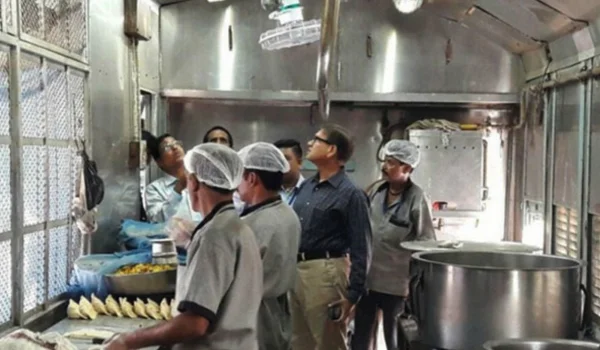
Catering is one of the most visible railway business categories.
Opportunities can include:
- Tea and snack stalls
- Fast Food Units
- Food Plazas
- Refreshment Rooms
- Jan Aahaar
- Onboard catering
Current 2026 government procurement listings show IRCTC opportunities for all of these categories, including five-year catering contracts for Jan Aahaar and refreshment rooms and e-tender cum auction opportunities for Fast Food Units and Food Plazas.
This category can suit:
- Restaurant operators
- Food entrepreneurs
- Catering companies
- Experienced hospitality businesses
- Railway Station Retail Business
Retail businesses can target immediate passenger needs.
Possible categories include:
- Convenience stores
- Multi Purpose Stalls
- Book stalls
- Travel accessories
- Beverages
- Mobile accessories
- Local products
The exact products allowed depend on the commercial licence or contract.
A railway retail business can earn from frequent, low-value passenger transactions.
- Railway Station Parking Business
Parking is another established business model.
A contractor can operate designated:
- Two-wheeler parking
- Car parking
- Commercial-vehicle parking
- Other authorised parking facilities
The contractor generally earns through applicable parking charges while paying the contractual and operating costs.
The main financial challenge is avoiding an excessively high bid.
- Railway Advertising Business
Railway stations provide advertising inventory through:
- Hoardings
- Digital displays
- LED screens
- Platform branding
- Wall advertising
- Station branding
This can be approached in two ways:
Advertising agency model: Buy authorised inventory and sell campaigns to businesses.
Advertising-contractor model: Obtain commercial rights and operate the advertising inventory.
The second model normally requires greater financial and operational capacity.
- Railway Tourism Business
Tourism creates opportunities around popular train routes and stations.
Businesses can offer:
- Tour packages
- Hotel bookings
- Station transfers
- Sightseeing
- Tourist taxis
- Local guides
- Pilgrimage packages
IRCTC’s tourism ecosystem includes rail tour packages, tourist trains, Bharat Gaurav trains, luxury trains, hotels and other travel services.
This makes railway tourism suitable for both small travel businesses and larger tourism operators.
- Railway Parcel and Logistics Business
Railways also create opportunities in:
- Parcel booking support
- Packing
- Collection services
- Local delivery
- Logistics
- Warehouse support
- Parcel-space leasing
Larger logistics operators may explore railway parcel leasing opportunities, while smaller entrepreneurs can operate private courier and packaging businesses near stations.
- Railway Infrastructure Business
Infrastructure is one of the largest railway business sectors.
Companies can work in:
- Civil construction
- Bridges
- Track-related works
- Station redevelopment
- Electrification
- Signalling
- Telecom
- Water systems
- Drainage
- Building maintenance
- Renewable energy
RITES, a railway-sector public enterprise, continues to issue contracts for railway-related engineering and infrastructure work. A June 2026 RITES tender, for example, covered telecom and FOIS connectivity for a private railway siding and carried an estimated value of about ₹1.37 crore excluding GST.
- Railway Equipment Supply Business
Indian Railways requires a large range of materials and equipment.
Potential supply categories include:
- Electrical equipment
- Cables
- Batteries
- Lighting
- Mechanical components
- Safety products
- Construction materials
- Workshop equipment
- Communication equipment
Indian Railways reported procurement expenditure of ₹75,793 crore on relevant goods during 2023–24, demonstrating the scale of the procurement market.
Manufacturers, authorised distributors and specialised suppliers can target this market.
- Railway Maintenance and Facility Management
Railway infrastructure needs ongoing maintenance.
Businesses can provide services related to:
- Cleaning
- Housekeeping
- Electrical maintenance
- Plumbing
- HVAC
- Building upkeep
- Pest control
- Facility management
Current 2026 IRCTC procurement listings include empanelment for service providers in areas including catering, housekeeping and facility management.
This can be an attractive category for service companies that may not want to take up large construction contracts.
- Railway Engineering Consultancy
Engineering firms can participate without directly executing physical construction.
Services can include:
- Surveys
- Design
- Project management consultancy
- Feasibility studies
- DPR preparation
- Technical supervision
- Quality consultancy
- Testing
This business is more suitable for qualified engineering and consulting firms with the appropriate experience.
Railway Business Opportunities by Investment Level
There is no single investment requirement for railway business.
The amount depends heavily on the category.
Small Investment Business Ideas
Some comparatively smaller models can include:
- Small authorised food outlet
- Tea/snack business
- Travel-service agency
- Packing service near station
- Small courier centre
- Local tourism services
The actual cost still depends on location and business structure.
Medium Investment Opportunities
Examples include:
- Café
- Fast-food outlet
- Parking contract
- Small hotel near station
- Taxi fleet
- Facility-management business
- Small civil contract
- Material-supply business
High Investment Opportunities
Examples include:
- Food Plaza
- Large parking contract
- Station redevelopment subcontract
- Infrastructure EPC work
- Railway equipment manufacturing
- Parcel Van leasing
- Large logistics operation
The higher the contract size, the more likely it is that technical experience, financial capacity and working capital will become important.
How Railway Tenders Work
Many railway businesses are awarded through formal procurement processes.
The general structure is:
Tender Notice → Eligibility Check → Technical Bid → Financial Bid → Evaluation → Award → Contract
However, not all opportunities follow exactly the same model.
Some may use:
- E-tender
- Open tender
- Limited tender
- E-auction
- E-tender cum e-auction
- Empanelment
- Rate contract
- Service contract
- Licence arrangement
Current 2026 IRCTC examples show both limited e-tenders for onboard catering and open e-tender cum e-auction arrangements for station catering.
How to Find Railway Business Tenders
The Government of India’s ePublishing system is an important source for Central Government procurement.
Current 2026 listings show active IRCTC opportunities with tender IDs, closing dates and bid-opening information.
Entrepreneurs should also monitor:
- Indian Railways
- Railway Board
- Zonal railways
- Divisional railways
- IRCTC
- RITES
- Other railway-sector PSUs
- Government e-procurement portals
Do not search only for the word “railway tender.”
Instead, search according to your business.
For example:
Railway catering tender
Railway parking tender
Railway housekeeping tender
Railway civil work tender
Railway electrical tender
Railway supply tender
IRCTC food plaza tender
This produces more relevant opportunities.
How to Apply for a Railway Tender
Step 1: Select Your Business Category
First decide what you can realistically deliver.
For example:
- Food business
- Parking
- Infrastructure
- Equipment supply
- Logistics
- Facility management
Step 2: Search for a Suitable Opportunity
Find a tender matching your location, experience and capacity.
Step 3: Check Eligibility
Look for:
- Minimum turnover
- Previous experience
- Technical qualifications
- Business structure
- Certifications
- Equipment
- Manpower requirements
Do not assume you qualify simply because the tender is publicly listed.
Step 4: Read the Complete Document
Check:
- Scope of work
- Contract period
- EMD
- Tender fee
- Security deposit
- Performance guarantee
- Payment terms
- Penalties
- Termination conditions
- Technical specifications
Step 5: Prepare Documents
Common requirements can include:
- PAN
- GST
- Business registration
- Bank details
- Financial statements
- Experience certificates
- Work-completion certificates
- Technical documents
- Declarations
The actual list depends on the tender.
Step 6: Submit the Bid
Follow the exact online submission process.
A technical error or missing document can lead to rejection even when the business itself is capable of performing the work.
Step 7: Participate in Auction When Applicable
Some opportunities use an e-auction after technical qualification.
IRCTC’s current 2026 catering opportunities demonstrate this structure.
Step 8: Contract Award
After selection, the successful bidder may need to:
- Pay security/performance amounts
- Sign the agreement
- Submit additional documents
- Take possession or receive work instructions
- Start operations
Railway Business Investment: What Should You Calculate?
The biggest mistake is to calculate only the amount required to win the tender.
You also need enough money to run the business.
Your financial plan should include:
- Tender/Contract Cost
This could be the licence fee, contract value, quoted price or other commercial commitment.
- EMD
The tender may require an Earnest Money Deposit.
- Security or Performance Guarantee
Some contracts require additional financial security after award.
- Infrastructure
You may have to purchase equipment, build facilities or make approved modifications.
- Staff
Labour costs can be significant in catering, parking, housekeeping and construction.
- Working Capital
You may need money for several months of operations.
- Taxes and Compliance
GST and other applicable costs must be included.
Example of Railway Business Profit Calculation
Suppose a hypothetical contract generates:
₹30 lakh annual revenue
Operating costs:
- Staff: ₹8 lakh
- Materials: ₹7 lakh
- Transport: ₹2 lakh
- Equipment/maintenance: ₹2 lakh
- Administrative costs: ₹2 lakh
- Contract-related cost allocation: ₹5 lakh
Estimated operating surplus:
₹6 lakh
This is only an illustration.
Actual railway business margins can vary considerably because each contract has different terms, payment schedules and operating requirements.
Why Railway Businesses Need Working Capital
A contract may be profitable on paper but still create cash-flow problems.
For example:
Revenue received later
while
Salary + materials + fuel + rent + supplier payments = immediate
This gap must be financed.
Contractors should therefore calculate:
How many months of operating expenses can I fund without depending on expected payments?
This is especially important in infrastructure, facility management and supply businesses.
Direct Railway Contractor vs Subcontractor
A new company does not always need to become a direct railway contractor immediately.
| Factor | Direct Contractor | Subcontractor |
| Contract | With railway/organisation | With main contractor |
| Eligibility | Often stricter | Depends on main contractor |
| Project Responsibility | Higher | Limited work package |
| Capital Requirement | Often higher | Potentially lower |
| Experience Requirement | Often important | Can be easier to enter |
| Suitable For | Established companies | New/specialist businesses |
Subcontracting can help a smaller company develop railway-sector experience.
Railway Business Opportunities for Beginners
A beginner should generally start with something that matches existing skills.
Food Background
Consider:
- Tea/snacks
- Catering
- Fast food
- Bakery
Transport Background
Consider:
- Taxi
- Station transfers
- Logistics
- Parcel services
Construction Background
Consider:
- Small civil contracts
- Maintenance
- Material supply
- Equipment rental
Technology Background
Consider:
- Telecom services
- IT systems
- CCTV/networking
- Software support
Trading/Manufacturing Background
Consider:
- Railway material supply
- Equipment distribution
- Approved product procurement
This skill-based approach is usually safer than entering an unfamiliar category simply because the market is large.
Important Railway Tender Risks
- Overbidding
A high winning bid can make the contract unprofitable.
- Inadequate Working Capital
You may win the tender but struggle to execute it.
- Missing Eligibility Conditions
A business can lose an opportunity because of a technical or documentation issue.
- Penalties
Railway contracts can have specific service-level and performance conditions.
- Delays
Construction and service projects can face delays and unexpected site conditions.
- Price Increases
Material and labour costs can change during a project.
- Contract Termination
Serious non-compliance can have substantial financial consequences.
How to Choose a Good Railway Business Opportunity
Before bidding, ask:
Do I understand this business?
Do I meet the eligibility conditions?
Can I arrange the required capital?
Can I fund the operation until payments arrive?
Is the expected revenue realistic?
What happens if revenue is 20% lower than expected?
What happens if operating costs rise?
These questions are more important than simply looking at the advertised contract value.
Railway Business vs Normal Private Business
| Factor | Railway Business | Normal Private Business |
| Entry | Often tender/licence/contract | Usually direct setup |
| Competition | Tender competition | Market competition |
| Rules | Contract-specific + general laws | General business laws |
| Customer | Railway/passenger/organisation | Depends on market |
| Revenue Model | Contract + sales/service | Sales/service |
| Contract Risk | Can be significant | Usually more flexible |
| Compliance | Often detailed | Varies |
Railway business can offer scale, but it usually comes with greater contractual discipline.
Current Railway Business Opportunities in 2026
Current government procurement listings provide a useful picture of the range of opportunities available.
As of July 2026, IRCTC listings include:
- Onboard catering for trains without pantry cars
- Onboard catering for trains with pantry/minipantries
- Jan Aahaar
- Refreshment Rooms
- Fast Food Units
- Food Plazas.
RITES has also published 2026 railway-related technical and infrastructure tenders, including telecom and railway siding work, as well as electrical infrastructure projects.
This demonstrates that railway business opportunities exist across both passenger-facing businesses and technical/infrastructure sectors.
Is Railway Business Profitable?
Railway business can be profitable, but there is no single profit margin for the sector.
A food stall may earn through customer sales.
A parking contractor earns through vehicle charges.
A supplier earns through product margins.
A civil contractor earns from contract execution.
A consultant earns professional fees.
Therefore, profitability must be calculated for each business model separately.
The basic formula is:
Revenue – Direct Costs – Contract Costs – Staff – Finance Costs – Taxes – Overheads = Profit
Final Thoughts
Railway business opportunities in India cover a much larger market than station shops and food stalls. Entrepreneurs can participate in catering, retail, parking, advertising, tourism, logistics, infrastructure, equipment supply, maintenance, consultancy and facility management.
The procurement market itself is substantial. Indian Railways reported ₹75,793 crore of procurement expenditure on relevant goods in 2023–24, while current 2026 tender listings continue to show opportunities across catering and infrastructure-related categories.
For beginners, the best approach is usually to start with a business model that matches existing experience and capital rather than chasing a large railway contract simply because the contract value looks attractive.
Before submitting any bid, carefully check the eligibility criteria, tender fee, EMD, security requirements, contract duration, payment terms, penalties and complete scope of work.
Most importantly, calculate the business from the bottom up:
Expected Revenue → Total Cost → Working Capital → Break-Even → Expected Profit
A railway tender is only a good business opportunity when the numbers remain attractive after all contractual and operating costs are included.
FAQs
- What are the best railway business opportunities in India?
Popular categories include catering, railway station retail, parking, advertising, tourism, parcel/logistics, infrastructure contracting, equipment supply, maintenance and professional services.
- Can a small business participate in railway tenders?
Yes, depending on the tender. Some opportunities may have relatively accessible eligibility criteria, while larger infrastructure and specialised contracts can require significant turnover, technical capability and previous experience.
- How much investment is required for a railway business?
There is no fixed amount. A small service or retail business may require comparatively less capital, while infrastructure contracts, large catering units, equipment manufacturing and major logistics operations can require substantial investment and working capital.
- Where can I find railway tenders?
Monitor the Government of India’s e-procurement system, Indian Railways, zonal/divisional railway websites, IRCTC and railway-sector PSUs such as RITES. Current 2026 listings show active IRCTC and railway-related tenders on government procurement systems.
- What documents are usually needed for railway tenders?
Depending on the tender, you may need PAN, GST, business-registration documents, financial statements, experience certificates, technical documents, EMD proof and various declarations. The exact checklist is always determined by the individual tender.
- Is it better to become a railway contractor or supplier?
It depends on your business. Construction and service companies may pursue contracts, while manufacturers and distributors may find supply opportunities more suitable. A smaller company can also consider subcontracting to an established railway contractor as a way to build sector experience.