Railway station parking can be an interesting business opportunity because busy stations receive a continuous flow of cars, motorcycles, scooters, autos and other passenger vehicles. People need a safe place to leave their vehicles while travelling by train, making parking a regular passenger service.
However, railway station parking is not normally a business where you simply rent a piece of railway land and start collecting parking fees. Parking rights at railway stations are generally awarded through an authorised contract or tender. Indian Railways’ parking policy provides for open tendering for normal parking contracts, with contracts generally awarded for a period of up to three years.
This guide explains how the business works, investment requirements, possible earnings, eligibility and important points to check before bidding.
Quick Information
| Factor | Details |
| Business Type | Railway parking contract |
| Main Customers | Train passengers, visitors and staff |
| Vehicles | Cars, motorcycles, scooters and other permitted vehicles |
| Entry Method | Railway tender/authorised contract |
| Contract Period | Can be up to 3 years for normal parking contracts |
| Main Costs | Tender/contract amount, staff, equipment, security and maintenance |
| Major Requirement | Ability to meet tender eligibility and financial conditions |
| Earnings | Depend on vehicle volume, approved rates and contract cost |
| Key Risk | Paying a high contract amount compared with actual parking demand |
What Is a Railway Station Parking Business?
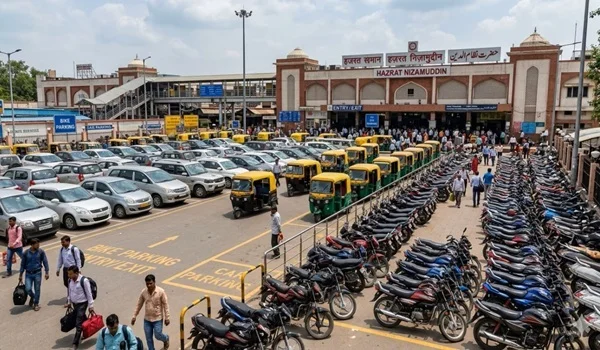
A railway station parking business involves operating an authorised parking area on or around railway premises.
The operator manages the parking facility and collects charges according to the applicable railway contract and approved parking rates.
Depending on the station, the parking area may accommodate:
- Motorcycles
- Scooters
- Cars
- Auto-rickshaws
- Taxis
- Other permitted passenger vehicles
Indian Railways also has provisions for separate arrangements for passenger-carrying commercial vehicles, call taxis, radio taxis and prepaid auto/taxi booths where suitable space is available.
How Does Railway Parking Business Work?
The basic model is straightforward:
Railway authority → Tender → Successful bidder → Parking contract → Parking operation → Collection of approved charges
The contractor is responsible for operating the parking area according to the terms of the contract.
This can include:
- Managing vehicle entry and exit
- Issuing parking receipts/coupons
- Collecting permitted charges
- Maintaining records
- Managing parking staff
- Keeping the area organised
- Providing required equipment
- Handling customer complaints
- Maintaining security arrangements
The exact responsibilities depend on the tender document.
How to Get a Railway Station Parking Contract
Step 1: Find a Parking Tender
The first step is to identify a railway station where parking rights are being offered.
Indian Railways’ parking policy provides for single-packet open tendering for normal parking contracts across station categories.
You should monitor:
- Indian Railways websites
- Zonal railway websites
- Divisional railway tender notices
- Government e-procurement portals
Step 2: Read the Tender Document
Never bid based only on the tender title.
Read the complete document and check:
- Contract period
- Parking area
- Vehicle categories
- Reserve price
- EMD
- Security deposit
- Eligibility criteria
- Payment schedule
- Parking rates
- Equipment requirements
- Maintenance responsibilities
- Penalties
- Termination conditions
Step 3: Submit the Bid
If you satisfy the eligibility conditions, submit the required documents and financial bid before the deadline.
The winning bidder then completes the required formalities before starting operations.
Railway Parking Business Investment
There is no fixed investment amount for railway station parking.
This is one of the most important points to understand.
Your financial requirement can vary according to:
- Station location
- Passenger footfall
- Parking capacity
- Contract duration
- Reserve price
- Successful bid amount
- Security deposit
- EMD
- Equipment requirements
- Staff requirement
For example, railway parking policies can calculate reserve prices using factors such as the number of users, types of vehicles, prevailing parking charges and previous successfully operated rates.
Therefore, an entrepreneur should calculate the economics of each individual tender, rather than relying on a general claim such as “railway parking requires ₹10 lakh.”
EMD and Financial Requirements
Tender participation may require an Earnest Money Deposit (EMD).
The exact amount depends on the tender and applicable railway policy.
For example, one comprehensive railway parking policy states that EMD for parking contracts should be at least 2% of the tender value, with the possibility of a higher amount in certain circumstances.
Some station categories may also have additional eligibility requirements.
For example, the policy document for one railway zone specifies experience and income-tax-clearance requirements for certain higher-category stations, while these requirements do not apply in the same way to lower categories.
Always follow the current tender document, because conditions can vary by railway zone, station and contract.
Other Costs You May Need to Consider
Winning the tender is only the beginning.
Your operating budget may include:
- Contract/Licence Cost
This is generally the biggest business expense and depends on the successful bid.
- Staff Salaries
You may need people for:
- Entry counter
- Exit counter
- Parking management
- Security
- Supervisory work
- Parking Equipment
Depending on the contract, equipment may include:
- Ticketing equipment
- Receipt/coupon systems
- Barriers
- Signboards
- CCTV cameras
- Lighting
- Computers or billing systems
- Maintenance
The parking area may require:
- Cleaning
- Lighting maintenance
- Equipment maintenance
- Signage maintenance
- General upkeep
- Technology
Modern parking operations may use:
- Digital payments
- QR payments
- Computerised tickets
- CCTV
- Automated barriers
The railway parking policy also provides for computerised coupons at certain major stations and requires CCTV and other arrangements in specified station categories.
Railway Parking Earnings: How Are They Calculated?
Your revenue mainly depends on the number of vehicles using the parking facility and the applicable parking rates.
A simple calculation is:
Daily Revenue = Number of Vehicles × Average Parking Charge
For example, suppose a parking facility handles:
- 400 two-wheelers per day
- Average charge: ₹20
Two-wheeler revenue would be:
400 × ₹20 = ₹8,000 per day
If the facility also handles cars, the total revenue will be higher.
But this is only gross revenue, not profit.
You still need to subtract:
- Contract/licence cost
- Staff salaries
- Maintenance
- Electricity
- Equipment
- Taxes
- Security
- Administrative expenses
- Other operating costs
Example of Railway Parking Profit Calculation
Consider a hypothetical parking operation:
| Particular | Example |
| Daily gross collection | ₹25,000 |
| Monthly gross collection | ₹7,50,000 |
| Staff & operations | ₹2,00,000 |
| Maintenance & other costs | ₹75,000 |
| Contract cost allocation | ₹3,00,000 |
| Approx. operating surplus | ₹1,75,000 |
This is only an illustration, not an expected railway parking profit.
Actual numbers can be dramatically different depending on the station, tender price and vehicle traffic.
What Makes Railway Parking Profitable?
- High Vehicle Footfall
The more vehicles entering the parking area, the greater the revenue potential.
- Good Station Location
Major stations, junctions and stations serving large urban areas can have strong demand.
- Controlled Operating Costs
Staffing, maintenance and security costs need to remain under control.
- Reasonable Tender Price
This is extremely important.
A parking contract can have excellent passenger traffic but still become financially difficult if the winning bid is too high.
- Efficient Collection
Fast entry and exit reduce queues and improve customer experience.
Railway Parking Business Requirements
Requirements vary by tender, but you may need documents such as:
- PAN
- Identity documents
- GST-related documents where applicable
- Financial documents
- Experience certificates where required
- EMD
- Tender fee
- Affidavit/declarations
- Other documents specified in the tender
One railway parking policy, for example, lists documents including Aadhaar, income-tax clearance for specified station categories and a declaration relating to previous termination/blacklisting.
The exact requirements should always be checked in the latest tender notice.
CCTV, Barriers and Digital Parking
Railway parking is becoming more organised and technology-driven.
At certain major station categories, railway parking policies provide for:
- CCTV cameras
- Computerised parking coupons
- LED rate boards
- Automated boom barriers
The policy states that CCTV and related systems are to be provided by the licensee at specified stations, with costs considered while fixing the licence fee.
This means that an entrepreneur should not calculate only the tender amount. Technology and infrastructure costs can also affect profitability.
Railway Station Parking vs Private Parking
| Factor | Railway Parking | Private Parking |
| Property | Railway premises | Private/commercial property |
| Entry | Tender/authorisation | Property owner’s permission |
| Contract | Usually specified | Depends on agreement |
| Pricing | Subject to applicable conditions | Greater flexibility |
| Passenger traffic | Potentially high | Depends on location |
| Competition | Other authorised facilities | Local competition |
| Rules | Railway-specific | Local/general regulations |
A private parking facility near a railway station may offer more operational flexibility, while a railway parking contract can provide direct access to station traffic.
Railway Parking Business Challenges
Before bidding, consider the following risks.
High Tender Competition
Popular stations can attract multiple bidders.
High Contract Cost
Overbidding can reduce or eliminate profit.
Variable Demand
Vehicle traffic may change by:
- Day
- Season
- Train schedules
- Holidays
- Local events
Operational Problems
Parking disputes, lost tickets, vehicle damage complaints and customer disagreements can require careful management.
Infrastructure Expenses
CCTV, barriers, billing systems, lighting and other requirements can increase startup costs.
How to Check Whether a Parking Tender Is Worth It
Before submitting a bid, estimate:
Expected annual revenue
minus
Contract cost + staff + maintenance + equipment + taxes + other expenses
Then calculate the expected surplus.
Also conduct a physical survey if possible.
Check:
- Number of parking spaces
- Vehicle movement during peak hours
- Existing parking facilities
- Nearby private parking
- Current parking charges
- Train frequency
- Passenger footfall
- Local competition
Do not assume that a busy railway station automatically means a highly profitable parking contract.
Can a Beginner Start Railway Parking Business?
Yes, but eligibility depends on the specific tender.
Some railway policies have additional experience requirements for certain higher-category stations, while requirements can be more relaxed for other categories.
For a beginner, a smaller opportunity may be more manageable than a large parking contract involving substantial infrastructure and staff.
Railway Station Parking Business: Pros and Cons
Advantages
- Regular passenger demand
- Potentially high vehicle traffic
- Established business model
- Contract-based operation
- Opportunity to use digital parking systems
Disadvantages
- Tender competition
- Upfront financial commitment
- Strict contract conditions
- Staff and security requirements
- Risk of overbidding
- Limited flexibility under the contract
Final Thoughts
Railway station parking can be a viable business for entrepreneurs who understand tendering, vehicle traffic, operating costs and contract conditions.
The biggest mistake is to look only at the possible daily collection. A parking business becomes profitable only when the revenue generated from vehicles is sufficient to cover the contract cost and all operating expenses.
Before bidding, study the actual parking area, estimate vehicle demand, calculate realistic revenue and read every condition in the tender document. This approach can help you decide whether a particular railway parking opportunity is genuinely worth pursuing.
FAQs
Can anyone start a railway station parking business?
Not directly. Parking rights at railway stations are generally awarded through an authorised tender or contract process, subject to the eligibility conditions of the particular opportunity.
How much investment is required for railway parking?
There is no fixed amount. The financial requirement depends on the tender value, EMD, security deposit, equipment, staff, maintenance and other operating costs.
How much can a railway parking contractor earn?
Earnings depend on the number of vehicles, parking charges and operating costs. Gross collection and actual profit are different, so profitability should be calculated using the specific tender.
What documents are required for a railway parking tender?
Requirements vary. Depending on the station and tender, documents may include identity documents, PAN, financial records, experience documents, EMD and declarations.
Is railway parking a profitable business?
It can be profitable if vehicle demand is strong and the contract is secured at a commercially sensible price. High bidding costs can significantly reduce profitability.
Where can I find railway parking tenders?
Check the relevant Indian Railways zonal/divisional websites and official government e-procurement platforms for current parking tenders. Always verify the latest tender document and its eligibility conditions before bidding.