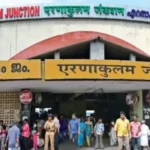
Railway station parking is a structured commercial business in which an operator manages an authorised parking facility for passengers and other permitted users. Unlike a normal private parking lot, a railway station parking contractor usually receives operating rights through a railway tender, licence or contract.
The contractor collects parking charges according to the applicable conditions and manages daily operations such as vehicle entry, ticketing, parking space management, customer service, cleanliness and security.
Indian Railways’ parking policy provides for open tendering of normal parking contracts and lays down rules relating to reserve price, eligibility, EMD, security deposit and contract administration.
Quick Information
| Factor | Details |
| Business Type | Railway parking contract |
| Main Customers | Train passengers, visitors and permitted vehicles |
| Vehicles | Two-wheelers, cars and other permitted vehicles |
| Entry Method | Railway tender/contract |
| Main Revenue | Parking charges |
| Major Costs | Contract fee, staff, equipment, security and maintenance |
| Key Financial Factor | Vehicle volume vs contract cost |
| Common Requirement | EMD, documents and eligibility compliance |
| Main Risk | Overbidding and insufficient vehicle demand |
What Is a Railway Station Parking Contractor?
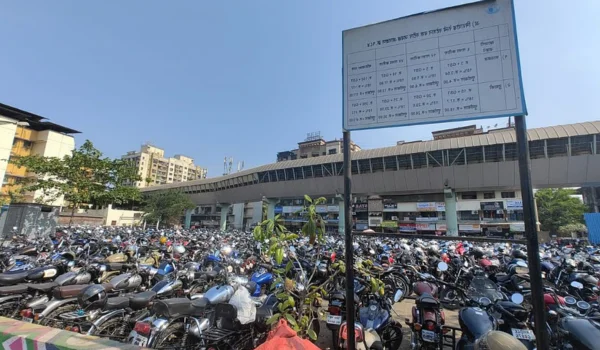
A railway parking contractor is an individual, firm or company that receives authorised rights to operate a designated parking facility at a railway station.
The contractor may be responsible for:
- Managing vehicle entry and exit
- Issuing parking tickets
- Collecting applicable charges
- Maintaining parking records
- Managing parking staff
- Maintaining cleanliness
- Organising vehicles
- Providing required signage
- Managing security arrangements
- Following railway instructions
The exact duties are specified in the particular tender and contract.
How the Railway Parking Business Model Works
The basic model is:
Railway Authority → Parking Tender → Bidder → Contract Award → Parking Operation → Customer Payments
The railway identifies a parking area and determines the commercial terms, including the reserve price and other conditions.
Interested bidders submit their offers.
After evaluation and acceptance of the successful bid, the selected contractor obtains the right to operate the facility for the contract period.
The contractor then earns revenue from the parking charges collected from users.
Types of Railway Parking
Depending on the station and available facilities, a contract may cover:
Two-Wheeler Parking
For:
- Motorcycles
- Scooters
- Other permitted two-wheelers
Car Parking
For private cars and other permitted four-wheelers.
Premium Parking
Some stations may provide designated premium parking facilities.
Commercial Passenger Vehicles
This can include arrangements involving passenger-carrying commercial vehicles, taxis or autos.
Indian Railways’ parking policy separately provides for arrangements concerning two-wheelers, four-wheelers, passenger-carrying commercial vehicles, call/radio taxis and prepaid auto/taxi booths.
Railway Parking Tender Process
Understanding the tender process is the most important part of this business.
Step 1: Find a Parking Tender
Parking opportunities are published through railway commercial notices and applicable government e-procurement systems.
Before bidding, identify:
- Railway zone
- Railway division
- Station
- Parking category
- Parking area
- Contract period
Do not assume that every station with an existing parking area is immediately available for tender.
Step 2: Download the Tender Document
Read the complete tender document rather than only the advertisement.
Check:
- Tender value
- Reserve price
- EMD
- Security deposit
- Eligibility
- Experience requirements
- Parking area
- Permitted vehicles
- Contract duration
- Payment terms
- Penalties
- Maintenance obligations
Step 3: Check Eligibility
Eligibility varies according to the station and applicable railway policy.
For example, one Indian Railways parking policy provides additional financial and experience criteria for A-1, A and B category stations, while for other station categories it allows registered companies, proprietorship firms, partnership firms, cooperative societies and individuals, subject to the specified requirements.
Another railway-zone policy requires prior similar-work experience for certain NSG-1 and NSG-2 station parking tenders, while relaxing that criterion for lower categories.
Therefore, never assume that eligibility for one railway tender applies to another.
Step 4: Arrange the EMD
EMD means Earnest Money Deposit.
It acts as a financial commitment to discourage non-serious bids.
Indian Railways’ parking policies have used EMD requirements such as at least 2% of tender value, with provisions allowing a higher amount in certain circumstances. Some zonal policies have prescribed different amounts.
The applicable tender document always takes priority.
Step 5: Submit the Bid
Submit the required technical and financial documents according to the tender instructions.
Depending on the tender, documents can include:
- PAN
- Registration documents
- Experience certificates
- Financial records
- Income-tax documents
- Affidavits
- EMD proof
- Other declarations
Step 6: Technical/Eligibility Evaluation
The railway checks whether bidders satisfy the eligibility and documentation requirements.
A bidder failing mandatory conditions can be rejected before the financial stage.
Step 7: Financial Bid Evaluation
The financial offer is then evaluated according to the tender process.
The exact evaluation mechanism must be understood from the tender document rather than assuming that simply quoting the highest number always wins.
Step 8: Letter of Acceptance and Contract
After the successful bidder is selected, the required formalities are completed.
This can include:
- Letter of Acceptance
- Security deposit
- Performance guarantee, where required
- Agreement signing
- Payment formalities
- Site handover
Step 9: Start Operations
The contractor takes charge of the parking area and starts operations according to the contract.
Railway Parking Reserve Price
Reserve price is the minimum benchmark used by the railway while inviting bids.
Indian Railways’ parking policy states that reserve price can be assessed using factors such as:
- Number of users
- Types of vehicles
- Parking rates
- Comparable parking facilities
- Prevailing local conditions
This is important because reserve price directly affects the economics of the business.
EMD vs Security Deposit
These are different.
| Factor | EMD | Security Deposit |
| Purpose | Bid participation security | Contract performance security |
| Paid | With tender/bid | After award as applicable |
| Main Role | Discourages frivolous bids | Protects railway against contractual default |
| Refund/Adjustment | According to tender conditions | Released according to contract conditions |
One railway parking policy specifies a security deposit equivalent to three months’ licence fee after adjustment of EMD, while another railway-zone policy provides a larger security/performance structure. This shows why the actual tender must be checked carefully.
Railway Parking Contract Period
Contract duration is not identical for every station.
A railway parking policy provides that certain categories can have contracts of up to three years, while the applicable period for other categories may differ.
The tender notice should therefore be checked for:
- Start date
- End date
- Extension provisions
- Renewal conditions
- Early termination rules
Railway Parking Revenue Model
The basic revenue formula is:
Parking Revenue = Number of Vehicles × Applicable Parking Charge
Suppose a hypothetical parking facility handles:
- 500 two-wheelers per day
- Average charge of ₹20
Two-wheeler revenue:
500 × ₹20 = ₹10,000 per day
If car parking adds another ₹12,000 per day:
Total daily gross revenue = ₹22,000
Monthly gross collection at 30 days:
₹22,000 × 30 = ₹6,60,000
This is only an illustration. Actual rates and vehicle volumes vary substantially from one station and contract to another.
Parking Contractor Profit Calculation
Gross collection is not profit.
A simplified model is:
Gross Parking Revenue
minus
Railway Contract Cost
minus
Staff
minus
Security
minus
Equipment
minus
Maintenance
minus
Electricity
minus
Taxes and other expenses
equals
Operating Profit
The biggest variable is often the contract cost.
Why Overbidding Can Be Dangerous
Suppose a parking location is capable of generating ₹80 lakh in annual gross collection.
That does not mean a contractor should bid ₹70 lakh.
The contractor still has to pay:
- Staff
- Maintenance
- Security
- Equipment
- Taxes
- Other operating costs
A high bid can therefore turn a busy parking location into a low-margin or loss-making business.
The correct approach is to calculate your maximum commercially viable bid before participating.
How to Calculate the Maximum Bid
Start with expected gross annual revenue.
Then subtract:
- Expected operating expenses
- Contingency
- Desired profit
- Taxes and other applicable liabilities
The remaining amount gives an approximate ceiling for the contract cost.
For example:
Expected revenue = ₹80 lakh
Operating expenses = ₹20 lakh
Desired profit = ₹15 lakh
Maximum sustainable contract-related cost:
₹80 lakh − ₹20 lakh − ₹15 lakh = ₹45 lakh
This is only a simplified business calculation. Actual tax treatment, financing costs and contract conditions must also be considered.
What Documents May Be Required?
The exact checklist depends on the tender.
Potential documents can include:
- PAN card
- Aadhaar or identity proof
- Firm/company registration
- Partnership deed
- Proprietorship documentation
- Audited financial statements
- Income-tax returns
- Experience certificates
- Satisfactory performance certificates
- Non-blacklisting affidavit
- EMD documentation
One Indian Railways policy specifically lists PAN and, for certain station categories, audited financial statements and applicable income-tax documentation; it also requires declarations concerning blacklisting/debarment.
Experience Requirements
Not every railway parking tender treats new bidders the same way.
For some higher-category stations, experience of similar parking work can be required.
For example, one policy requires successful completion of specified similar parking contracts for A-1, A and B category stations, with the required value linked to the reserve price.
Another railway-zone policy requires at least one similar completed work of 35% of advertised tender value for certain NSG-1 and NSG-2 stations, while not applying that criterion to lower categories.
This can make smaller or lower-category parking opportunities more accessible to newcomers, depending on the current tender.
Daily Operations of a Parking Contractor
Winning the tender is only the beginning.
The contractor may need to manage:
Entry
- Vehicle identification
- Ticket generation
- Time recording
Parking
- Proper vehicle placement
- Space management
- Traffic flow
Exit
- Ticket verification
- Fee collection
- Record matching
Security
- CCTV where required
- Staff monitoring
- Complaint handling
Maintenance
- Cleaning
- Lighting
- Signboards
- Equipment
The exact requirements are determined by the contract.
Technology in Railway Parking
Modern parking operations can use technology for faster and more transparent transactions.
Potential systems include:
- Digital ticketing
- QR payments
- UPI
- CCTV
- Automatic barriers
- Computerised records
- Vehicle-number recording
A railway parking policy also provides for computerised parking coupons and CCTV-related arrangements at specified station categories.
The entrepreneur should include technology costs in the initial financial calculation if the tender requires them.
Common Types of Parking Charges
Depending on the contract, charges may be structured around:
- Hourly parking
- Short-duration parking
- Daily parking
- Extended parking
- Different rates for two-wheelers and cars
The exact rates and conditions are controlled by the applicable railway arrangement.
A contractor should not independently increase charges merely to improve margins.
Railway Parking Contractor vs Private Parking Business
| Factor | Railway Contractor | Private Parking |
| Property | Railway premises | Private premises |
| Entry | Railway tender/contract | Private agreement |
| Pricing | Subject to contract/rules | Generally more flexible |
| Customer Base | Station users | Location-dependent |
| Contract Cost | Potentially significant | Rent/property cost |
| Regulation | Railway-specific + general laws | General/local laws |
| Business Control | Contract-limited | Generally greater |
For entrepreneurs who cannot meet railway tender requirements, a private parking facility near a station may provide an alternative business model.
Major Risks
- Overbidding
The biggest financial risk is paying too much for the contract.
- Lower Vehicle Traffic
Actual usage may be lower than expected.
- Competition
Nearby private parking can reduce demand.
- Staff Costs
Poor staffing decisions can reduce margins.
- Contract Penalties
Failure to comply with conditions can result in penalties or other contractual action.
- Infrastructure Costs
CCTV, barriers, ticketing and maintenance can add significant operating expenses.
How to Make Railway Parking Business Successful
Conduct a Traffic Survey
Estimate the number of vehicles entering throughout the day.
Study Existing Parking
Check:
- Current rates
- Capacity
- Occupancy
- Peak periods
- Nearby alternatives
Calculate Break-Even
Determine how many vehicles must use the facility every day to cover costs.
Avoid Emotional Bidding
Do not increase your bid just because competitors are quoting aggressively.
Use Digital Payments
Faster payment can reduce queues and improve records.
Control Leakage
Proper ticketing and monitoring can reduce revenue loss.
Maintain Good Service
A clean and organised parking area can improve customer experience.
Is Railway Parking Contract a Good Business for Beginners?
It can be, but beginners need to be careful.
Lower-category stations may have fewer eligibility barriers under some railway policies, while major stations may require stronger financial capacity and prior experience.
For a first-time contractor, a smaller parking contract can be easier to understand and manage than a large station with high annual contractual commitments.
The key is to start with a contract where the risk matches your financial capacity.
Important Mistakes to Avoid
Do not:
- Bid without calculating expected revenue
- Assume passenger footfall equals vehicle traffic
- Ignore EMD and security requirements
- Skip the tender’s eligibility conditions
- Underestimate staff expenses
- Ignore technology requirements
- Charge amounts outside the permitted structure
- Assume renewal is guaranteed
Final Thoughts
Railway station parking contracting is a tender-driven business, not simply a normal parking operation. The opportunity can generate recurring revenue from passengers, but profitability depends heavily on the contract price and actual vehicle volume.
The most important calculation is:
Expected Parking Revenue − Total Operating Cost − Contract Cost = Expected Profit
Before submitting a bid, study the station’s vehicle demand, existing parking rates, competing facilities, reserve price, EMD, security deposit, experience requirements and contract conditions.
Indian Railways has different parking policies and eligibility provisions across its zones and station categories, so entrepreneurs should always rely on the current tender document rather than assuming that an older policy or another railway division’s conditions apply universally.
FAQs
- How can I become a railway station parking contractor?
You need to identify an applicable railway parking tender, check eligibility, submit the required documents and EMD, participate in the bidding process and complete the contract formalities if selected.
- How much EMD is required for a railway parking tender?
There is no single amount for every tender. Railway parking policies have used requirements such as at least 2% of tender value, while certain zonal policies have prescribed different EMD structures. Always follow the specific tender document.
- Is previous parking experience compulsory?
Not always. Experience requirements vary according to the station category and tender. Some higher-category station tenders require previous similar work, while lower-category opportunities can have fewer experience requirements.
- How does a railway parking contractor make money?
The contractor collects applicable parking charges from users. Profit is the amount remaining after contract costs, staff, security, maintenance, equipment, taxes and other expenses.
- Can I charge my own parking rates?
Not freely. The contractor must follow the applicable railway contract, approved charges and other operating conditions.
- Where can I find railway parking tenders?
Monitor official Indian Railways zonal/divisional websites and government e-procurement platforms. The tender document should always be checked for the latest eligibility, EMD, reserve price, contract period and bidding conditions. Government e-procurement systems also show the staged nature of tender processes, including technical evaluation, financial evaluation and award stages.