Police verification is a process in which the police verify a person’s identity, address, background or other information for a particular purpose.
It is commonly associated with passport applications, Police Clearance Certificates (PCC), employment or character verification, tenant verification, domestic help verification and certain licences or government procedures.
There is no single police verification process that applies to every situation. The documents, application method, verification procedure and time taken can vary depending on why the verification is required and which police authority is handling it.
For example, Passport Seva has a specific police-verification process for passport applications, while Delhi Police separately provides services for tenant verification, domestic help verification, PCC and character verification.
What Is Police Verification?
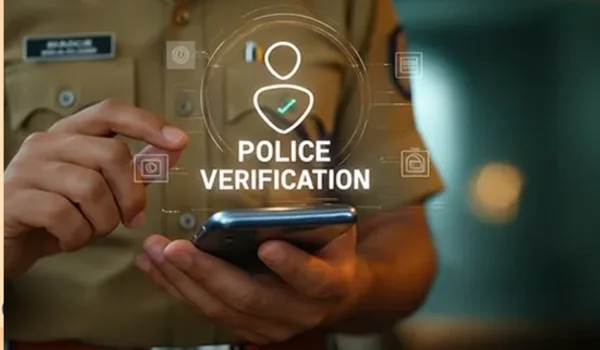
Police verification is an enquiry conducted by the police to confirm information provided by an individual or organisation.
Depending on the purpose, the police may verify:
- Name and identity
- Current address
- Previous addresses
- Period of residence
- Employment or other details
- Criminal record or police records, where relevant
- Information provided in the application
- Documents submitted by the applicant
The exact scope depends on the service.
For example, Delhi Police’s PCC procedure requires address proof for the relevant period of residence, while its employee and domestic-help verification procedures involve checking the person’s particulars and antecedents.
Where Is Police Verification Required?
Police verification may be required for different purposes, including:
| Purpose | What May Be Verified |
| Passport | Address, identity and relevant police records |
| Police Clearance Certificate | Address and police-record information |
| Government employment | Identity, address and background |
| Private employment | Background or character verification where required |
| Tenant verification | Tenant’s identity and address |
| Domestic help verification | Identity and antecedents |
| Certain licences | Information relevant to the licence |
| Immigration or visa-related purposes | Police clearance/background information |
The requirement is not identical for all services.
Police Verification for Passport
Passport applications are one of the most common situations where people encounter police verification.
Passport Seva states that whether police verification is required depends on the type of application and the circumstances. For many fresh passport applications, pre-police verification is required, while in many re-issue cases police verification may not be required or may be conducted after passport issuance.
Passport Seva also provides for different processing arrangements depending on whether verification is conducted before or after passport issuance.
Basic Passport Verification Process
The broad process is:
- Submit the passport application.
- Attend the required Passport Seva appointment.
- Passport authorities determine whether police verification is required.
- Verification request is sent to the concerned police authority where applicable.
- Police verify the relevant details.
- Police submit the verification report.
- Passport processing continues according to the applicable procedure.
Passport Seva advises applicants to provide accurate details and carry the required original documents and photocopies to the appointment.
What Happens During Police Verification?
The exact procedure varies, but an officer may verify the information provided in the application.
This can include checking:
- Applicant’s identity
- Present address
- Previous address
- Duration of stay
- Supporting documents
- Local records
- Information from the applicant or other relevant persons
In address-related verification, the police may ask questions to confirm that the applicant actually lives at the stated address.
For some services, the applicant may be asked to appear at the police station or provide documents, while in other situations an enquiry may be conducted at the residence.
Therefore, there is no rule that police verification must always happen through a physical visit to the applicant’s home.
Documents Required for Police Verification
There is no universal document list for every type of police verification.
Commonly required documents may include:
- Aadhaar card or another identity document
- Passport, where applicable
- Address proof
- Rent agreement
- Electricity or water bill
- Bank passbook
- Driving licence
- Passport-size photograph
- Employment-related documents
- Application or reference number
- Previous address proof
The exact documents depend on the purpose.
For example, Delhi Police’s PCC guidance lists documents such as a driving licence, passport, registered rent agreement, bank passbook and utility bills as possible residence-related proof. It specifically notes that a rent agreement merely notarised, rather than registered where registration is required by its procedure, is not accepted as valid residence proof for that PCC process.
How to Prepare for Police Verification
Before verification, keep the following ready:
- Keep Your Identity Proof Ready
Keep the original identity document and copies if required.
- Keep Address Proof
Make sure your address proof corresponds with the address mentioned in the application.
- Keep Previous Address Details
If the application asks for previous addresses, keep the details and supporting documents available.
- Check Your Application
Review the information submitted online or in the form.
Pay particular attention to:
- Name spelling
- Date of birth
- Father’s/mother’s name
- Current address
- Previous addresses
- Employment details
- Dates and periods of residence
- Keep the Application Reference Number
The reference number can help you track the application or communicate with the relevant authority.
What If You Are Not at Home During Verification?
Being away from home when a police officer visits does not automatically mean that verification will fail.
The appropriate response depends on the purpose and local procedure.
If you know that verification is pending, make sure your contact details are correct and respond to any request from the concerned police station or authority.
If an officer visits while you are unavailable, you may need to coordinate a suitable verification method or provide the requested documents according to the applicable procedure.
Common Reasons for Police Verification Delay
Police verification can take longer for several reasons.
- Address Mismatch
A common problem is a difference between the address in the application and the address shown in supporting documents.
For example, the application may show a current rented address while the submitted proof shows a different address.
- Recent Change of Address
If you recently moved, verification may require additional checking of your current and previous addresses.
- Missing Documents
Incomplete documents can delay the enquiry.
- Previous Address Verification
If an applicant has lived at several locations, information may need to be obtained or verified from another police jurisdiction.
Delhi Police’s published procedures, for example, describe out-of-station verification arrangements for certain employee/domestic-help verification matters.
- Incomplete Application
Incorrect or missing information can require clarification before the verification report is completed.
- Police Station Workload
The time taken can also depend on the workload and number of verification requests being handled by the concerned police unit.
- Difficulty Contacting the Applicant
If the applicant cannot be reached or does not respond to requests for information, the process may take longer.
- Record Verification
Where the applicable service requires checking police records or antecedents, additional time may be required.
- Multiple Jurisdictions
A person who has lived in different cities or states may require verification involving more than one police jurisdiction.
- Holidays or Administrative Delays
Public holidays, weekends, transfer of files and other administrative factors can also affect processing time.
What Should You Do If Police Verification Is Delayed?
If your verification is taking longer than expected:
Check the Application Status
First check the status through the official portal associated with the service.
For passport applications, Passport Seva provides online application tracking and a grievance mechanism.
Contact the Concerned Police Station
If the verification request has already reached the police department, you can contact the relevant police station or verification unit and ask whether any document or clarification is pending.
Check for Address Issues
Make sure that your current address and previous address information is accurate.
Respond Quickly to Requests
If police ask for additional documents or clarification, provide them promptly.
Raise a Grievance Where Available
Some government services provide formal grievance mechanisms if processing is delayed beyond a reasonable period.
Passport Seva, for example, provides an online grievance facility and a national call centre for passport-related issues.
Can Police Verification Be Failed?
A verification report may not be favourable if the information provided cannot be verified or if the applicable enquiry identifies a relevant adverse issue.
However, an unfavourable verification result does not necessarily mean the same thing for every service.
For example, passport authorities consider the police verification report as part of the passport decision process. The applicant may also have a mechanism to respond to or clarify issues depending on the circumstances.
Therefore, it is important to identify the exact reason for an adverse report instead of assuming that the application is permanently rejected.
What If Your Address Is Different From Your Documents?
This is a common issue.
Suppose you currently live in Delhi but your Aadhaar or another document still contains your previous address.
Do not simply provide inconsistent information.
Instead:
- State the actual address as required by the application.
- Check what address proof the particular service accepts.
- Keep documents supporting your current residence.
- Keep previous-address information ready if required.
- Explain the difference honestly if asked.
The exact documentary requirement depends on the service.
Police Verification for Tenants
Tenant verification is a separate type of police verification.
For example, Delhi Police provides a specific Tenant Verification Form and lists tenant verification among its citizen services.
The purpose is generally to record and verify information about tenants staying at a property.
The landlord should follow the procedure prescribed by the local police authority rather than assuming that the process is identical across all Indian cities.
Police Verification for Employees
Some employers request police or character verification before or during employment.
The process can involve verification of identity, address and antecedents.
Delhi Police’s published procedures state that verification of employees who are residents of Delhi is carried out by the concerned police station and describe procedures for certain private/domestic employees and other workers.
Whether a private employer can or should conduct a particular type of police verification depends on the applicable employment and police procedure.
Police Verification vs Police Clearance Certificate
These terms are related but are not identical.
| Police Verification | Police Clearance Certificate |
| Enquiry conducted for a particular purpose | Formal certificate issued after the prescribed process |
| Can be part of passport processing | Often used for employment, immigration, visa or other purposes |
| May involve address/background checks | Generally confirms the result covered by the PCC procedure |
| May be initiated by an authority | Usually requires an application for the certificate |
For example, Passport Seva separately lists Police Clearance Certificate (PCC) as a passport-related service.
How Long Does Police Verification Take?
There is no single nationwide processing time for every type of police verification.
The time depends on:
- Purpose of verification
- Police jurisdiction
- Completeness of documents
- Address history
- Whether another jurisdiction is involved
- Police workload
- Whether clarification is required
- The department or authority requesting the verification
Passport processing has its own service timelines and rules, while local tenant, employee or PCC procedures may operate differently.
Therefore, claims that every police verification must be completed within a fixed number of days should be treated cautiously.
Common Mistakes to Avoid
Avoid these mistakes:
- Providing an incorrect address
- Hiding a previous address when it is required
- Submitting inconsistent documents
- Giving false information
- Ignoring calls or requests from the verification authority
- Assuming police verification is the same for every service
- Using unofficial websites to check application status
- Paying an unofficial person to “clear” verification
- Waiting indefinitely without checking the official status
Passport Seva specifically warns applicants about fraudulent websites and advises citizens to use the official Passport Seva website for passport-related applications and services.
Frequently Asked Questions
Is police verification mandatory for every passport?
No. Whether verification is required depends on the application and circumstances. Passport Seva states that fresh and re-issue applications can have different police-verification requirements.
Do police always visit your home?
No. The exact verification method depends on the purpose and local procedure.
What documents are needed?
Usually identity and address-related documents are important, but the exact list depends on the service.
Can police verification be delayed because of an address mismatch?
Yes. An address mismatch can require additional clarification or verification.
What if I recently changed my address?
Provide the correct current address and keep relevant previous-address information and supporting documents ready if the particular application requires them.
Can I check the status of passport police verification?
Passport applicants can use the official Passport Seva status and grievance facilities to track or raise issues concerning their passport application.
Is police verification the same as a PCC?
No. Police verification is an enquiry conducted for a particular purpose, while a Police Clearance Certificate is a formal certificate issued under the relevant PCC procedure.
Conclusion
Police verification in India is not one single process. The procedure depends on why the verification is required, such as a passport, PCC, employment, tenant verification or another government or licensing service.
The most common causes of delay include address mismatches, incomplete documents, multiple previous addresses, inter-jurisdiction verification, incomplete information and administrative workload.
To avoid unnecessary delays, provide accurate information, keep identity and address documents ready, respond promptly to police queries and use only the official portal or police department for status updates. For passport-related verification, the official Passport Seva system provides application tracking and grievance facilities.