Business-to-business, or B2B, businesses sell products or services to other businesses instead of directly to individual consumers. In India, the B2B market covers a wide range of activities, from wholesale trading and office supplies to digital services, packaging, industrial products and business support.
One advantage of a B2B business is that a single customer can generate recurring orders. For example, an office may regularly purchase stationery, a restaurant may repeatedly order packaging materials, or a retailer may require inventory every month.
However, B2B businesses also require careful attention to pricing, payment terms, customer relationships and working capital.
If you are looking for a low-investment B2B business in India, there are several models that can be started on a small scale and expanded as the customer base grows.
What Is a B2B Business?
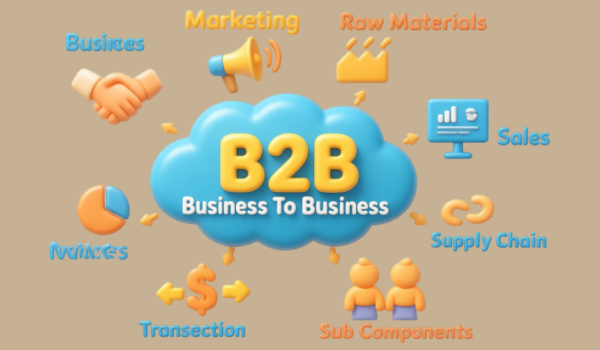
A B2B business provides products or services to another business.
For example:
Manufacturer → Distributor → Retailer → Customer
In this chain, the manufacturer, distributor and retailer may all be B2B businesses when they transact with each other.
B2B businesses can sell:
- Physical products
- Raw materials
- Business supplies
- Software
- Professional services
- Marketing services
- Logistics services
- Maintenance services
- Packaging
- Equipment
Unlike many consumer businesses, B2B businesses often depend on repeat orders, contracts or long-term relationships.
How Does a B2B Business Work?
The basic process is relatively simple:
Find a business need → Identify customers → Offer a product or service → Agree on pricing → Deliver → Collect payment → Build repeat business
The main difference from B2C is the customer.
A consumer may purchase a product once, while a business may require the same product every week or month.
For example, a restaurant may continuously need:
- Food packaging
- Cleaning supplies
- Disposable items
- Printing materials
- Uniforms
- Maintenance services
This creates an opportunity for suppliers who can provide consistent quality and reliable delivery.
- Packaging Material Supply
Packaging is required by manufacturers, retailers, restaurants, e-commerce sellers and many other businesses.
You can supply products such as:
- Corrugated boxes
- Paper bags
- Courier bags
- Labels
- Tapes
- Food containers
- Bubble wrap
- Stretch film
You can start by sourcing products from manufacturers and supplying them to local businesses rather than manufacturing packaging yourself.
How It Works
You identify businesses that regularly need packaging, obtain wholesale quotations, calculate your landed cost and supply products according to their requirements.
Investment
A small operation can start with limited inventory by keeping commonly required products and sourcing specialised products after receiving orders.
Revenue Model
You earn through the difference between your purchase price and selling price. Larger recurring orders can provide opportunities for better supplier pricing.
- Office Stationery Supply
Offices, schools, coaching centres and businesses regularly purchase stationery.
Products can include:
- Notebooks
- Printer paper
- Pens
- Files
- Folders
- Envelopes
- Staplers
- Printer supplies
- Office accessories
Instead of operating a traditional retail stationery shop, you can build a B2B customer base and supply offices directly.
How It Works
Create a product catalogue and approach offices, schools and other institutions. Offer scheduled deliveries for regularly used products.
This model can become more valuable when customers place repeat orders instead of making one-time purchases.
- Cleaning and Housekeeping Supplies
Commercial establishments need cleaning products regularly.
Potential customers include:
- Offices
- Restaurants
- Hotels
- Clinics
- Schools
- Warehouses
- Retail stores
- Housing societies
Products may include cleaning chemicals, garbage bags, mops, brushes, gloves and other housekeeping supplies.
A supplier can create packages according to the customer’s requirements.
For example, instead of selling individual products, you could provide a monthly housekeeping supply package to a small office.
- Corporate Printing Services
Businesses regularly require printed materials such as:
- Business cards
- Brochures
- Flyers
- Letterheads
- Packaging labels
- Menus
- Posters
- Promotional materials
You do not necessarily need your own printing press.
A low-investment model is to operate as a service provider, collect orders from businesses and outsource production to reliable printing partners.
How It Works
The process can be:
Customer order → Design approval → Printing partner → Quality check → Delivery
Your profit comes from the difference between the amount charged to the customer and the cost paid to the printing partner, after accounting for your operating expenses.
- Digital Marketing Services for Small Businesses
Many small businesses need help with their online presence but cannot maintain a full-time marketing team.
A B2B digital marketing service can offer:
- Social media management
- Search engine optimisation
- Website content
- Google Business Profile management
- Basic advertising support
- Email marketing
- Local SEO
This can be started from home with relatively limited infrastructure.
The major investment is usually in skills, software and customer acquisition rather than physical inventory.
Revenue Model
You can charge:
- Monthly retainers
- Project-based fees
- Service packages
- Per-campaign charges
Recurring monthly contracts can make revenue more predictable.
- Website and Software Services
Small businesses increasingly need websites, online catalogues, booking systems and other digital tools.
You can offer services such as:
- Business website development
- E-commerce website setup
- Website maintenance
- Landing pages
- Domain and hosting management
- Basic business automation
You can either develop the services yourself or build a small team of freelancers.
The key is to clearly define what is included in the package and how ongoing maintenance will be handled.
- Uniform and Workwear Supply
Businesses such as schools, hospitals, hotels, restaurants, factories and security agencies may require uniforms.
You can source garments from manufacturers and supply them to businesses.
Additional services can include:
- Logo printing
- Embroidery
- Custom sizing
- Name tags
- Packaging
- Periodic replacement orders
This model can work particularly well when you secure institutional customers with recurring requirements.
- Promotional Products Business
Companies regularly purchase promotional products for events, employees, customers and marketing campaigns.
Products may include:
- Printed pens
- Notebooks
- T-shirts
- Mugs
- Bags
- Keychains
- Corporate gifts
- Desk accessories
You can operate as an intermediary between businesses and manufacturers.
Instead of maintaining a large inventory, you can source products after receiving confirmed orders.
This can reduce inventory risk during the early stage.
- Business Equipment Rental
Some businesses require equipment only occasionally rather than purchasing it permanently.
Depending on your location and market, possible rental categories include:
- Projectors
- Sound systems
- Cameras
- Event equipment
- Office equipment
- Tools
- Furniture
The business model involves purchasing equipment and renting it repeatedly.
The challenge is ensuring good utilisation. Equipment sitting unused for long periods ties up capital without generating revenue.
- B2B Recruitment Services
Recruitment is another service-based B2B opportunity.
Small and medium-sized companies may need help finding employees but may not have dedicated recruitment teams.
A recruitment service can specialise in areas such as:
- Sales
- Customer support
- Accounting
- IT
- Hospitality
- Retail
- Manufacturing
The business generally earns a recruitment fee when a suitable candidate is hired, depending on the agreement with the client.
This model requires strong sourcing, screening and communication skills rather than substantial physical inventory.
- Local Logistics and Delivery Services
Businesses frequently need local transportation for moving products between suppliers, warehouses and customers.
A small B2B logistics operation can focus on a particular city or business segment.
Potential customers include:
- Retailers
- Wholesalers
- Restaurants
- E-commerce sellers
- Distributors
- Local manufacturers
You can begin with your own vehicle or work with a network of drivers and expand as order volume increases.
- Industrial Consumables Supply
Small manufacturers regularly need consumable items that may not be part of their finished products.
Depending on the local industry, these can include:
- Safety equipment
- Gloves
- Fasteners
- Lubricants
- Packaging material
- Cleaning supplies
- Workshop accessories
The opportunity depends heavily on the industrial clusters in your area.
For example, a city with strong automobile, textile, engineering or manufacturing activity may have demand for different types of industrial supplies.
How to Choose a Low-Investment B2B Business
Not every B2B opportunity will suit every entrepreneur.
Consider these factors before selecting a model.
- Local Demand
Identify businesses in your area and determine what they purchase regularly.
- Repeat Orders
A product or service that businesses need repeatedly can provide better potential for recurring revenue.
- Competition
Find out how many suppliers are already serving the market.
Competition is not necessarily a reason to avoid a category, but you need a clear reason for businesses to choose you.
- Working Capital
Product-based businesses may require money for inventory, while service businesses generally require less inventory.
- Payment Cycle
B2B customers may request credit. Understand how long it may take to receive payment before accepting large orders.
- Scalability
Consider whether you can serve more customers without increasing costs at the same rate.
B2B Product Business vs B2B Service Business
| Factor | B2B Product Business | B2B Service Business |
| Inventory | Usually required | Usually low or none |
| Initial investment | Can be higher | Often lower |
| Main requirement | Supplier network | Skills and expertise |
| Working capital | Can be significant | Generally lower |
| Scalability | Through volume and distribution | Through clients and team |
| Examples | Packaging, stationery | SEO, recruitment, web development |
A service business may be easier to start with limited capital, while a product business can benefit from repeat bulk orders once a strong customer network is established.
How to Get Your First B2B Customers
The first customers are often the most difficult to acquire.
Start by creating a list of potential businesses in your target area.
You can approach them through:
- Direct visits
- Phone calls
- WhatsApp business communication
- Local business networks
- Industry events
- Referrals
- Business directories
Instead of sending a generic message, understand what the business needs and offer a specific solution.
For example, a restaurant may be more interested in a reliable monthly packaging supplier than a general product catalogue.
Common Mistakes in B2B Business
Avoid these common mistakes:
- Giving excessive credit to new customers
- Depending on one large customer
- Ignoring payment follow-ups
- Competing only on price
- Buying too much inventory
- Failing to document orders
- Not checking supplier reliability
- Offering services without clearly defined deliverables
- Expanding before understanding unit economics
Cash flow management is particularly important because a business can have strong sales but still face financial pressure if customers delay payments.
Final Thoughts
There are many low-investment B2B business ideas in India, ranging from packaging and stationery supply to digital marketing, recruitment, printing, uniforms and local logistics.
The most suitable opportunity depends on your available capital, skills, local market and ability to acquire business customers.
If you have limited capital, service-based B2B models can reduce inventory requirements. If you have supplier relationships and access to working capital, product-based B2B businesses can provide opportunities for repeat orders.
Before starting, identify a specific business problem, find out how companies currently solve it and calculate your complete cost of delivering the product or service. A focused B2B model with repeat customers can be easier to manage than trying to sell everything to everyone.