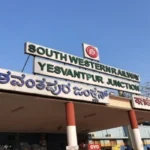
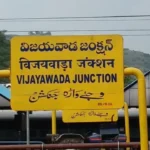
Tea and snacks are among the most practical food businesses for a railway station because passengers often need something quick, affordable and easy to carry. A person waiting for a train may buy tea, coffee or snacks even when they do not want a full meal.
This creates opportunities for tea stalls, snack counters, kiosks and other small catering units at railway stations. Indian Railways reported thousands of minor static catering units, including stalls and trolleys, in its 2023–24 statistics.
However, opening a tea or snacks outlet inside a railway station is not the same as opening a roadside stall. Railway commercial space generally operates through an authorised licence, tender, contract or allotment. Current IRCTC tender listings in 2026 also show opportunities for catering units such as fast-food units, refreshment rooms and Jan Aahaar at railway stations.
Quick Information
| Factor | Details |
| Business Type | Tea, coffee and snacks outlet |
| Main Customers | Railway passengers, visitors and staff |
| Popular Products | Tea, coffee, biscuits, samosa, poha, sandwiches and snacks |
| Business Location | Platform, concourse or other authorised station area |
| Entry Method | Tender, licence, allotment or authorised contract |
| Investment | Depends on station, outlet and contract |
| Main Revenue | Food and beverage sales |
| Major Costs | Contract charges, ingredients, staff and equipment |
| Main Advantage | Frequent repeat passenger demand |
| Major Challenge | Competition and railway compliance |
Why Tea and Snacks Work at Railway Stations
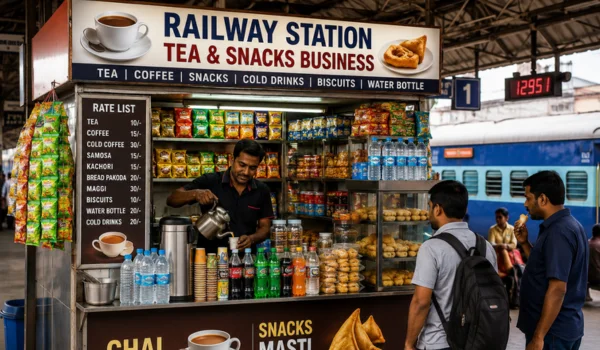
Tea and snacks have a major advantage over many other products: they are low-ticket, quick-consumption items.
Passengers may purchase them because they:
- Have a short waiting time
- Want a quick breakfast
- Need a beverage during travel
- Are travelling with children
- Are waiting for a delayed train
- Want something to carry onto the train
The business can therefore generate a high number of small transactions rather than depending on a few large orders.
- Railway Station Tea Stall
A tea stall is usually focused on speed and simplicity.
Common Products
- Milk tea
- Masala tea
- Coffee
- Green tea
- Packaged water
- Biscuits
- Light snacks
The menu should generally match the permitted products and conditions of the particular railway licence.
A tea stall can work particularly well near:
- Platform entrances
- Waiting areas
- Foot overbridges
- Busy concourses
- Main passenger circulation areas
The exact location matters because passengers often make purchase decisions within seconds.
- Snacks Counter
A snacks counter can provide a broader range than a simple tea stall.
Potential products include:
- Samosa
- Kachori
- Poha
- Idli
- Vada
- Sandwiches
- Cutlets
- Biscuits
- Packaged snacks
The best menu depends on passenger preferences and the approved food category for the outlet.
A commuter-heavy station may have strong demand for breakfast, while a long-distance station may see more demand for ready-to-eat snacks and beverages throughout the day.
- Tea + Snacks Combination Business
Combining tea with snacks can make the business model stronger.
For example:
Tea + Samosa
Tea + Biscuit
Coffee + Sandwich
Breakfast + Tea
This increases the average bill without requiring the customer to make a separate purchase.
The combination approach also creates opportunities for simple meal deals where permitted.
Railway Tender and Licence
This is one of the most important parts of the business.
You cannot simply find an empty space at a railway station and start selling tea.
The relevant railway/IRCTC commercial process may involve:
- Tender
- Auction
- Licence
- Contract
- Allotment
- Other authorised arrangements
Current 2026 government tender listings show IRCTC using e-tender cum e-auction processes for certain station catering opportunities, including fast-food units, food plazas, refreshment rooms and Jan Aahaar.
The exact process for a particular tea or snack outlet depends on the specific tender and station.
Food Safety Requirements
Food safety is another major requirement.
FSSAI states that every Food Business Operator must be licensed or registered under the applicable food-safety framework. FSSAI also specifically identifies food catering services in establishments under Central Government agencies such as Railways within the Central Licensing Authority framework.
FSSAI’s 2026 notifications also show that food-safety regulation continues to be updated, including amendments and railway-specific food-safety administration.
For a railway tea or snack outlet, check the applicable:
- FSSAI licence/registration
- Railway catering licence
- Hygiene requirements
- Food storage rules
- Water and cleaning requirements
- Pricing and billing conditions
- Waste-management requirements
The exact requirements should be verified for the particular outlet before starting operations.
Railway Tea Stall Investment
There is no fixed investment amount for a railway station tea stall.
The investment depends on:
- Station category
- Shop or kiosk size
- Location
- Tender/contract cost
- Security deposit
- Equipment
- Kitchen setup
- Initial inventory
- Staff
- Working capital
Main Startup Costs
- Railway Contract or Licence Cost
This may be one of the biggest expenses.
- Equipment
Depending on the permitted setup, equipment may include:
- Tea boiler
- Gas or electric heating equipment
- Refrigerator
- Counter
- Storage racks
- Utensils
- Water equipment
- Billing machine
- Initial Stock
You may need:
- Tea
- Milk
- Sugar
- Coffee
- Spices
- Snacks
- Packaging material
- Water
- Other approved products
- Staff
Labour costs depend on the size and operating hours of the outlet.
- Working Capital
You need enough cash to manage day-to-day purchases and expenses before sales become stable.
How Much Does a Tea Stall Earn?
There is no reliable single income figure because railway stations have very different passenger volumes.
A better approach is to calculate revenue using customer transactions.
Example
Suppose an outlet serves:
- 400 customers per day
- Average bill: ₹35
Daily sales:
400 × ₹35 = ₹14,000
Monthly sales at 30 days:
₹14,000 × 30 = ₹4,20,000
This is gross sales, not profit.
The business still has to pay:
- Ingredients
- Staff
- Railway contract/licence charges
- Electricity
- Packaging
- Cleaning
- Maintenance
- Taxes
- Wastage
- Other expenses
Tea Stall Profit Margin
Profit margin should be calculated at two levels:
Gross Margin
This is the money left after direct food and beverage costs.
Gross Profit = Sales – Direct Food Cost
For example, if monthly sales are ₹4,20,000 and direct ingredients/packaging cost is ₹1,50,000:
Gross Profit = ₹2,70,000
Gross margin:
₹2,70,000 ÷ ₹4,20,000 × 100 = 64.3%
This is only a hypothetical example.
Net Profit
Net profit comes after subtracting all operating expenses:
Net Profit = Sales – Food Cost – Staff – Contract Cost – Utilities – Maintenance – Taxes – Other Expenses
This is the figure entrepreneurs should actually focus on.
Why Gross Margin Can Be Misleading
Tea itself can have a relatively high gross margin because the raw-material cost per serving can be low.
But the business does not operate on ingredients alone.
For a railway outlet, the following can substantially affect the final margin:
- High licence or contract cost
- Staff expenses
- Long operating hours
- Wastage
- Equipment maintenance
- Electricity
- Packaging
- Cleaning
- Taxes
A product with an attractive gross margin can still generate a weak net profit if fixed expenses are high.
Example of Monthly Profit Calculation
Suppose a hypothetical tea and snacks outlet has:
| Particular | Monthly Amount |
| Gross sales | ₹6,00,000 |
| Ingredients & packaging | ₹2,10,000 |
| Staff | ₹90,000 |
| Railway contract allocation | ₹1,20,000 |
| Electricity & utilities | ₹25,000 |
| Cleaning & maintenance | ₹20,000 |
| Other expenses | ₹15,000 |
| Estimated operating profit | ₹1,20,000 |
Estimated operating margin:
₹1,20,000 ÷ ₹6,00,000 × 100 = 20%
Again, this is only an illustrative business model, not a standard railway-stall profit margin.
Actual results could be much higher or lower.
What Affects Tea Stall Profitability?
- Passenger Footfall
This is one of the biggest factors.
A stall at a major junction can have a completely different customer volume from one at a small station.
- Location Within the Station
A visible kiosk near passenger movement can have an advantage over a poorly positioned outlet.
- Average Bill Value
Selling only tea may generate lower revenue per customer.
Adding approved snacks can increase average order value.
- Food Cost
Milk, tea, oil, vegetables, flour and other ingredients affect margins.
- Wastage
Fresh snacks that remain unsold can reduce profitability.
- Contract Cost
This is especially important in railway businesses.
A high bid can make an otherwise attractive location financially difficult.
- Operating Hours
Railway stations can remain active for long hours, and some locations may require extended operation.
Long operating hours can increase revenue but also increase labour and utility costs.
Best-Selling Tea and Snack Categories
The exact menu depends on the approved licence, but common passenger-oriented categories can include:
Beverages
- Tea
- Coffee
- Milk-based drinks
- Packaged beverages
- Bottled water
Quick Snacks
- Samosa
- Kachori
- Vada
- Idli
- Poha
- Sandwiches
- Packaged snacks
Breakfast
- Poha
- Idli
- Upma
- Paratha-based items where permitted
- Tea/coffee combinations
The strongest products are usually those that are quick to serve, easy to carry and familiar to passengers.
How to Keep Food Costs Under Control
Buy According to Demand
Do not overstock perishable ingredients.
Standardise Portions
Consistent portion sizes help control food cost.
Track Daily Sales
Know which products sell at different times.
Reduce Menu Complexity
Too many items can increase wastage.
Negotiate Supplier Rates
Where practical, purchase commonly used ingredients from reliable suppliers at competitive rates.
Monitor Wastage
Track unsold food daily.
Tea Business Near Railway Station vs Inside Railway Station
You do not necessarily need railway premises to target railway passengers.
| Factor | Inside Station | Near Station |
| Railway approval | Required for railway premises | Generally not for private premises |
| Passenger access | Direct | Depends on location |
| Pricing flexibility | Contract-dependent | Generally greater |
| Space | Often limited | More options |
| Competition | Station-specific | Local market competition |
| Operating control | More restricted | Greater |
| Startup model | Tender/licence | Private rent/property |
For a beginner, a tea and snack shop near a busy railway station can sometimes be easier to start than obtaining a railway-station licence.
How to Start a Railway Tea & Snacks Business
Step 1: Choose the Location
Identify stations with strong passenger movement and suitable commercial opportunities.
Step 2: Find the Available Tender or Licence
Check official railway and IRCTC commercial notices.
Step 3: Study the Financial Terms
Calculate:
- Licence/contract cost
- EMD
- Security deposit
- Equipment
- Staff
- Working capital
Step 4: Build the Menu
Focus on quick-selling items that fit the permitted category.
Step 5: Complete Food-Safety Formalities
Obtain the applicable FSSAI licence/registration and meet railway food-safety conditions.
Step 6: Set Up the Outlet
Install equipment, counters, storage and payment facilities as permitted.
Step 7: Track Daily Numbers
Monitor:
- Customers
- Sales
- Average bill
- Food cost
- Wastage
- Labour cost
- Net margin
This will show whether the business is actually performing well.
Common Challenges
Competition
Busy stations can have multiple tea and snack outlets.
High Contract Costs
Bidding too aggressively can hurt future profitability.
Food Wastage
Perishable snacks need careful production planning.
Quality Control
Food quality can fall if staff are not properly trained.
Hygiene
Railway catering requires strong attention to cleanliness and food safety.
Price Restrictions
Depending on the contract and applicable rules, pricing may not be completely flexible.
Customer Rush
During train arrivals, dozens of customers may want service simultaneously.
This requires efficient operations and sufficient staff.
How to Increase Profit Margin
The goal should not simply be to sell more cups of tea.
A better approach is to increase revenue per customer while controlling direct and fixed costs.
For example:
Tea + Snack Combination
can increase average order value.
Other strategies include:
- Faster service
- Popular high-margin products
- Lower wastage
- Better inventory control
- Digital payments
- Consistent portion sizes
- Efficient staffing during peak hours
The exact product mix should be based on actual passenger demand.
Is Railway Station Tea Business Profitable?
Yes, it can be profitable, especially at stations with strong passenger traffic and sensible commercial terms.
But the biggest mistake is to look only at the price of tea.
A better calculation is:
Daily Sales
minus
Food Cost + Staff + Railway Charges + Utilities + Wastage + Other Expenses
equals
Daily Operating Profit
A low-priced tea stall can still generate a good business when it handles a large volume of customers efficiently.
At the same time, a stall at a busy station can struggle if the contractual cost is too high.
Final Thoughts
Railway station tea and snacks business can be a practical food-business opportunity because it targets a simple and recurring passenger need. Tea, coffee, breakfast items and quick snacks can generate frequent small transactions throughout the day.
However, the real business opportunity depends on three things:
Passenger volume + commercial terms + cost control
Before taking a railway stall, study the actual tender, estimate realistic daily customers, calculate the average bill and work out the break-even point.
For beginners, a small authorised tea/snack outlet can be easier to operate than a large restaurant or food plaza. Another option is to open a private tea and snacks shop near a busy railway station, which can provide greater flexibility over pricing, menu and property.
Most importantly, do not rely on generic online claims such as “railway tea stalls earn ₹1 lakh per month.” The actual profit can vary significantly from one location to another.
FAQs
How much investment is required for a railway tea stall?
There is no fixed amount. Investment depends on the station, tender or licence cost, security deposit, equipment, stock, staff and working capital.
What is the profit margin of a railway tea stall?
There is no standard railway-wide profit margin. Gross margins on some tea and snack items can be attractive, but net profit depends on railway charges, labour, food costs, wastage, utilities and other expenses.
Can anyone open a tea stall at a railway station?
No. A railway-station food outlet requires the applicable railway commercial authorisation, licence, tender, contract or allotment.
Does a railway tea stall need FSSAI compliance?
Yes. Food businesses must comply with applicable FSSAI licensing or registration requirements. FSSAI specifically includes food catering services in Central Government establishments such as Railways within its regulatory framework.
Which snacks are suitable for a railway tea stall?
Popular quick-service items can include samosa, kachori, poha, idli, vada, sandwiches, biscuits and packaged snacks, subject to the products permitted under the relevant licence.
Is it better to open a tea shop inside or near a railway station?
A shop inside the station can provide direct passenger access but requires railway permission and may have stricter commercial conditions. A private shop near the station usually offers greater flexibility but depends more heavily on the surrounding location and local competition.